Choosing the educational path for your child is a significant decision that shapes their early years. In the landscape of educational methodologies, two prominent choices often take center stage: Montessori and Traditional. This exploration is crafted to unravel the unique characteristics of each, aiding you in determining which philosophy aligns best with your child's learning style, developmental needs, and your family's educational values.
Understanding Montessori Education
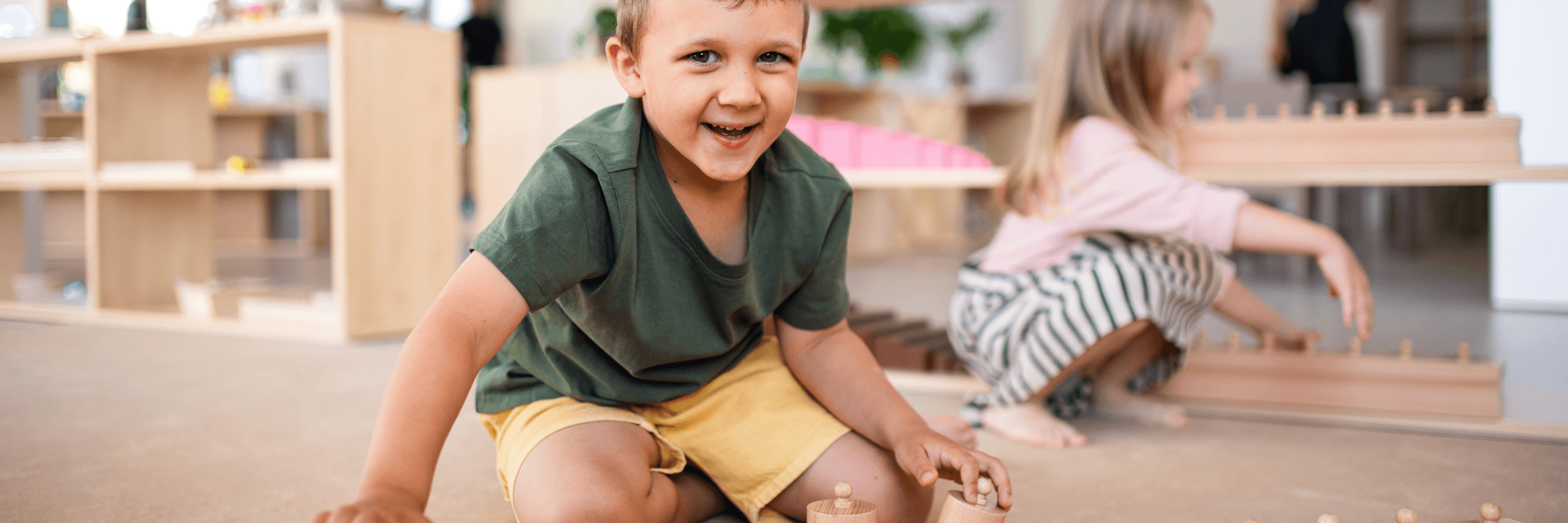
Montessori education, developed by Dr. Maria Montessori, distinguishes itself with a child-centric philosophy. It places a strong emphasis on self-directed learning, individualized instruction, and a meticulously prepared environment conducive to exploration and independence. In Montessori classrooms, children engage in hands-on activities with specialized materials, fostering a love for learning and intrinsic motivation.
Exploring Traditional Education
Traditional education, deeply rooted in many societies, follows a structured approach featuring a standardized curriculum and teacher-led instruction. Classrooms typically see students seated at desks, absorbing lectures, and adhering to a predetermined academic schedule. Evaluation methods often include tests and grades, with an emphasis on uniform progression through grade levels.
Classroom Dynamics
Montessori classrooms often embrace mixed-age groupings, allowing younger children to learn from their older peers and promoting collaboration and mentorship. Conversely, traditional classrooms usually involve age-segregated groups, with students advancing through grades based on standardized timelines.
Learning Approach
Montessori education prioritizes the holistic development of the child, encompassing academic, social, emotional, and physical facets. It encourages children to pursue their interests and learn at their own pace. Traditional education, while valuing academic achievement, may lean more towards standardized testing and consistent academic progression.
Teacher Role
In Montessori education, teachers play the role of guides, observing and facilitating a child's natural curiosity. They provide support when needed but empower children to take the lead in their learning journey. Traditional education often employs a more directive teaching style, with teachers delivering structured lessons to the entire class.
Assessment and Evaluation
Montessori assessment tends to be more holistic, considering a child's overall development and mastery of skills rather than relying solely on standardized testing. Traditional education frequently relies on tests and grades as the primary means of evaluation.
Independence and Critical Thinking
Montessori education fosters independence, self-motivation, and critical thinking skills. Children are encouraged to explore, make choices, and take responsibility for their learning. Traditional education may place a stronger emphasis on following instructions and adhering to a set curriculum.
Choosing between Montessori and Traditional education is a decision rooted in your child's unique needs and your family's educational values. Understanding the distinct features of each approach empowers you to make an informed decision. Whether your child thrives in a self-directed, collaborative Montessori environment or benefits from the structure and familiarity of traditional education, both paths can lay the foundation for a successful educational journey.
Always remember, every child is unique, and the ideal educational approach is one that resonates with their individual strengths, interests, and developmental pace.
Come see Walnut in person
Book a weekday tour — your child is welcome to join.